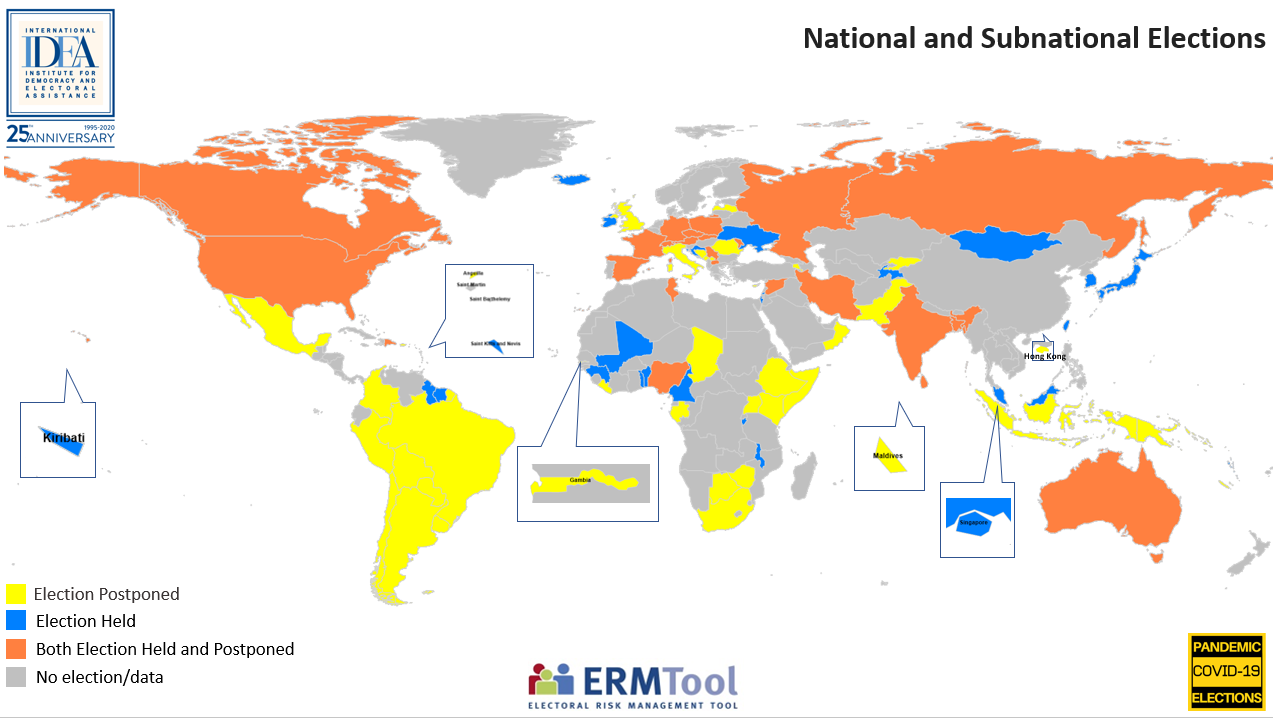
At least 70 countries and territories across the globe have decided to postpone national and subnational elections due to COVID-19
28 of these postponed elections are national or referendums
at least 55 countries and territories have decided to hold national or subnational elections despite concerns related to COVID-19 of which at least 38 have held national elections or referendums.
at least, 20 countries and territories have held elections that were initially postponed due to concerns related to COVID-19 of which at least 12 have held national elections or referendums
Map generated on 6 August 2020 using International IDEA’s Electoral Risk Management Tool (ERMTool)
For more details on which elections have been delayed, postponed or went ahead, visit the original IDEA article which also details case studies of different elections across the world
A cross-party group of Japanese lawmakers will consider sending a team of observers to Hong Kong in an effort to make sure that its Legislative Council election in September will be held in a fair manner, after China recently enforced a new security law strengthening control over the region.
The group, slated to be officially launched on Wednesday, is also expected to urge the Japanese government to relax visa requirements for Hong Kong citizens and not to assist investigations of those suspected of violating the security law, sources related to the group said.
Many fear that people opposing the security law will be barred from running in the Hong Kong legislative election by local authorities.
Hong Kong Students Demand True, Fair, & Free Election in Hong Kong (2014)
Former Defense Minister Gen Nakatani, a lawmaker from the ruling Liberal Democratic Party and one of those who led the establishment of the group, said in an interview that it is considering assembling a monitoring team for dispatch to Hong Kong for the September election.
“The election should reflect the will of the people and must be held in a fair manner so that it can be recognized by the international society,” he said.
Nakatani, a member of the House of Representatives, the lower chamber of Japan’s parliament, added that the envisioned observer team will see whether the composition of voters for the functional constituencies are appropriate. Members of the Legislative Council are selected from such constituencies, which represent business sectors, and geographical constituencies.
Queues formed early outside polling stations with strict conditions enforced to curb the risks from coronavirus.
Prime Minister Lee Hsien Loong called the election on June 24, saying the People’s Action Party (PAP), which had 83 of the 89 seats in the last parliament, needed a fresh mandate in order to take Singapore through the economic fallout caused by the coronavirus pandemic.
Many of the earliest voters were the elderly, who were advised to vote when polling stations opened at 8am (00:00 GMT) under strict conditions imposed as a result of the coronavirus.
The polls will close at 10pm (2pm GMT), two hours later than previously planned as long queues formed at some polling stations due to the extra virus checks. Officials from the Elections Department Singapore apologised “for the wait and the inconvenience”.
#GE2020: It’s drizzling in some parts of Singapore but many voters are out bright and early to cast their vote. Many of those first in line are senior citizens who have recommended voting time bands between 8am and noon https://t.co/Lwv1n87he8pic.twitter.com/gwHWuaqMs3
Everyone is required to wear masks, and voters are expected to spend no more than five minutes in a polling station, where they must scan their identity cards, sanitise their hands and put on disposable gloves before receiving a ballot paper. Singapore has 2.65 million eligible voters.
COVID-19 patients and those under quarantine cannot vote, but a mobile polling team will bring the ballot box to the rooms of Singaporeans who have recently returned from overseas and are in isolation at hotels.
At Democracy Volunteers, we have been consulting UK and international election bodies, and practitioners, to see what can be done to protect elections in the UK and ensure that they can proceed safely in 2021.
Join us for the launch of our findings on 24th July at 10:00 BST online by registering below. Tickets are free for all!
New agreement means both British and Polish citizens can continue to stand and vote in local elections in each other’s countries.
The UK and Poland have signed a treaty that secures the right of British and Polish citizens to stand and vote in local elections in each other’s countries following the UK’s exit from the EU. This ensures that British people living in Poland and Polish citizens living in the UK have the right to choose who represents them in local government in the country where they reside.
The treaty was signed by the UK’s Ambassador to Poland, Jonathan Knott and the Polish Secretary of State for Legal and Treaty Affairs, Piotr Wawrzyk, on Friday 29 May in Warsaw.
Foreign Office Minister for the European Neighbourhood, Wendy Morton, said:
We have protected the rights of nearly a million British and Polish citizens who live and work in each other’s countries. This treaty underlines our countries’ shared commitment to democracy and is a testament to the close ties between the UK and Poland, and our people. These ties have never been more important, as our countries work in partnership to overcome the global challenges posed by the coronavirus pandemic.
British Ambassador to Poland, Jonathan Knott said:
We have been determined that the difficult working environments we are all operating in due to the coronavirus pandemic should be no barrier to ensuring the rights of UK nationals living in Poland to elect their local representatives for many years to come, rights that will also be protected for Polish nationals living in the UK. I’m delighted we have reached this agreement – a sign of the depth of our bilateral relationship and the respect our countries have for each other.
Secretary of State for Legal and Treaty Affairs at the Polish Ministry of Foreign Affairs, Piotr Wawrzyk, said:
Today’s ceremony of the signing of the Polish-British agreement on the electoral rights in the local elections in Poland and the United Kingdom bears a special, symbolic character. It is a proof that ties between Poland and the United Kingdom remain strong and resistant, also in the adverse circumstances of the global pandemic. Our relations have never been closer than they are today. Poland and Britain co-operate closely in many important areas, we are linked by many formats of bilateral co-operation, the most important of which being the annual Intergovernmental Consultations. The agreement signed today proves that both countries want to maintain the closest relations possible, also following the United Kingdom’s withdrawal from the European Union.
This document, however, has – first and foremost – a human and civic dimension. It strengthens the ties between our countries by building a sense of the Polish-British community on the local level, both here in Poland, and in Britain. The effect of our joint efforts is confirmation of the full electoral rights at the local level for Poles living in the United Kingdom, as well as for the British people who chose Poland as their home.
I am convinced that the agreement will serve to further strengthen our strategic relations, which will continue to grow also after the end of the transitional period.
Poland’s Ambassador to the UK, Arkady Rzegocki said:
On behalf of Poles living and working in the United Kingdom, I would like to express great satisfaction at the fact that they will be able to continue to take an active part in the political life of their local communities. The ability for Poles to choose their representatives in local authorities, but also to apply for the positions of councillors and mayors, is of great significance not only for increasing the visibility of our compatriots in the United Kingdom – who have lived here for generations and have contributed significantly to the British cultural, economic and social life – but it also gives practical tools to implement their important demands.
This is another proof of how the Polish government is determined that the rights of Poles are not weakened after the UK exits the EU.
Poland is the fourth country to sign a voting rights treaty with the UK, following treaties signed with Spain, Portugal and Luxembourg last year.
On 24 June 2020 following the Wisconsin Primary election where numbers of polling places were cut from 187 to just 5 in Milwaukee and 11% statewide, the Brennan Center for Justice [external link] reported that:
Polling place consolidation reduced turnout by 8.6 percentage points
Black turnout was especially depressed from these closures.
‘To be clear, a surge in absentee voting may have offset at least a portion of any depressive turnout effects of consolidated polling places: while just 170,614 ballots were cast by mail in the 2016 presidential primary, 964,443 mail ballots were submitted this year.’
The report also concludes that: ‘The serious depressive effects uncovered in Milwaukee — and the racial disparities within them — are cause for concern. Clearly, not all voters who prefer voting in person will seamlessly transition to vote by mail. We cannot know whether Milwaukee residents cast fewer ballots because they were unfamiliar with the mail voting process did not trust it, or were prevented from voting in person because of the long lines. It is also possible that Black voters cast mail ballots at similar rates as other voters but had them rejected at higher rates, thereby reducing their effective turnout. However, given the magnitude of the effect, it is unlikely that this accounts for the full difference.’
‘The case of Milwaukee is important for election administrators to keep in mind as they prepare for this fall’s election. If it can be generalised to the rest of the country, polling place closures will come at the expense of voter turnout — and particularly the turnout of Black Americans. Moreover, a recently released Brennan Center report shows that fewer polling places lead to longer lines to vote, meaning that widespread closures might make casting a ballot harder for in-person voters. If we care about the representation of nonwhite voters and voters wary of casting mail ballots, we must ensure that there are safe in-person options this fall.’
For full details of the methodology and detailed results, please see the original article and see their working paper.
State lawmakers and voting rights activists are bracing for potential chaos during Kentucky’s primary election on 23 June after concerns over coronavirus led state elections officials to sharply limit the number of in-person polling places.
Polling stations numbers are down 95% for the 23 June primary
Both Louisville and Lexington only have one polling place each
According to the Kentucky Secretary of State there are 3,700 polling places used in a typical statewide election but on Tuesday 23 June this number is down to just 170.
These measures have led to outcry across the country, particularly from Democrats who say it could result in a nightmare scenario in big cities with hours-long lines, potentially disenfranchising Black voters. The commonwealth’s two most populous counties, Jefferson and Fayette, the homes of Louisville and Lexington, will have just one in-person polling location open in each.
Jefferson County, home to Louisville (population 600,000) and the largest Black community in the state, has all in-person voting at the city’s large convention centre. And in Fayette County (population 320,000), home to Lexington, the commonwealth’s second largest city, all in-person voting is on the football field at the University of Kentucky.
Kentucky Secretary of State Michael Adams pushed back against concerns about the election by noting the number of ballots cast absentee and during early voting and pointing out that the current rules were part of an agreement between the Republican election official and Kentucky Democratic Governor Andy Beshear.
The Kentucky secretary of state’s office said that as of Monday 21 June that it had issued over 867,311 mail-in ballots in the primary election, while just over half (442,919) have been returned.
In recent weeks, advocates for the blind have filed legal actions in Michigan, New York and Pennsylvania seeking access to systems already in place to deliver ballots electronically to military and overseas voters. Blind voters could then use their own computers and assistive technology to read and complete their ballots themselves.
“This is about equality,” said Chris Danielsen with the National Federation of the Blind, one of the groups suing. “If a secret ballot is important to you, it’s important to a blind person, as well.”
Because of these efforts, all three states agreed to make electronic ballots available during the primaries to voters with disabilities, and more actions are likely before November.
Voting technology experts have raised security concerns about such Internet-based voting systems. They also warn about implementing a new process so close to an election, risking the same sort of problems that derailed this year’s Iowa caucuses when a hastily developed mobile app failed.
Disability advocates said they have been calling on election officials for years to provide secure electronic absentee ballots. But only a small number of states have done so.
This year, Delaware and New Jersey worked with Democracy Live, a Seattle-based technology firm that works with election offices in several states, including California, Texas, Ohio and Florida to provide electronic ballots to military and overseas voters.
Although New Jersey piloted this system for local elections on 12 May, this will not be available for the state-wide primaries on 7 July as election officials said they determined the system wasn’t needed because some in-person voting would be available.
Conversely in Delaware, voters with disabilities were able to receive electronic ballots in recent elections through an in-house system that has since been retired in favour of the Democracy Live platform. It will be used during a pilot program in the state’s July 7 presidential primary.
Earlier this year in West Virginia, lawmakers expanded electronic ballot delivery to voters with a physical disability. Secretary of State Mac Warner advocated for the law, saying it was important to ensure no voter is disenfranchised.
“There are security concerns, but the likelihood of that happening is rather remote,” he said. “And it gets to a risk-reward benefit. The reward is getting people who wouldn’t otherwise be able to vote.”
An estimated 7 million adults in the U.S. have a visual disability, and advocates worry that some might choose to skip voting altogether this year rather than risk catching the virus or having their ballot privacy compromised.
Read more on this story including testimonials from blind and visually impaired voters by clicking the source link below [external website]
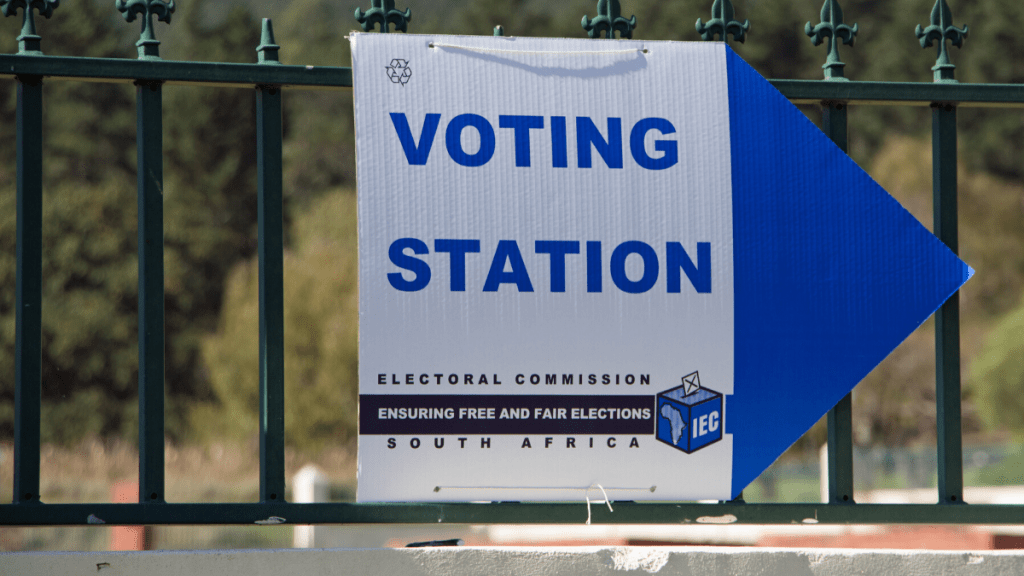
The African National Congress’ national working committee (NWC) has discussed a range of possibilities, including electronic voting for next year’s local elections.
During its Monday meeting, the NWC said it discussed a range of responses on these and other challenges impacting next year’s electoral system.
It includes a synchronisation of elections at national, provincial and local spheres of government; introducing elements of constituency-based representation at national and provincial spheres, consistent with the constitutional requirement for an electoral system that results, in general, in proportional representation; and the use of electronic voting.
Shortly after the government’s implementation of the lockdown to curb the spread of COVID-19 in March, the Electoral Court postponed by-elections scheduled for 3 and 10 June, along with associated activities, including voter registration.
This also meant that by-elections could be held beyond the 90-day legislated period for the filling of councillor vacancies, but not beyond 120 days from the date of the order, the Independent Electoral Commission said in a statement.
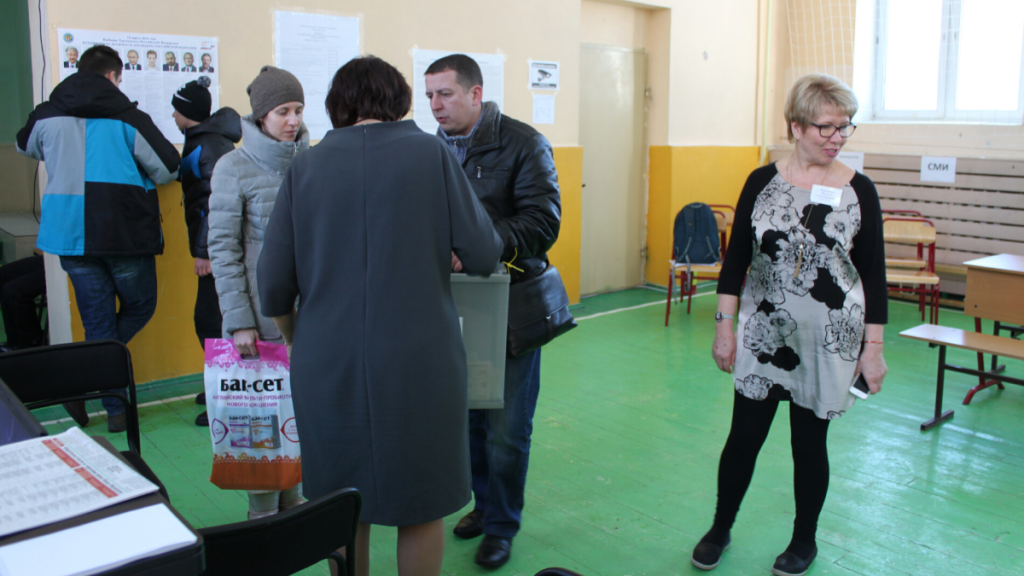
Public observers will be monitoring all forms of the upcoming nationwide vote on amendments to the Russian Constitution, Chairperson of the Central Election Commission (CEC) Ella Pamfilova told a session of the commission looking into a new voting procedure.
Voters at the 2018 Russian Presidential Election
“Observers must monitor all forms of the ballot” Pamfilova said, explaining that the presence of observers will be mandatory also for early voting and voting at home.
The amendments would expand the powers of the State Duma and the Federation Council (upper house), prohibit high-ranking officials from holding residency status overseas, limit the number of presidential terms and guarantee the supremacy of the Constitution over international treaties throughout Russia’s legal space.
In addition, the document stipulates strengthening the social obligations of the state and a nationwide vote on the amendments. The amendments to the Constitution require that the Russian head of state can only serve two terms, however, one of the amendments proposes that the current president can be re-elected if the new version of the Constitution comes into force.
The vote was initially set to take place on 22 April. However, Vladimir Putin chose to postpone it due to the situation with the spread of the novel coronavirus (COVID-19) in Russia. During a working session on Monday, Putin approved 1 July 2020 as the new date for the vote.








 the election observer
You must be logged in to post a comment.